GATLINBURG, Tenn. (WOKI / WVLT) – Gatlinburg’s police and fire departments are embracing new technology that allows emergency crews to see incident scenes before officers, firefighters or paramedics arrive.
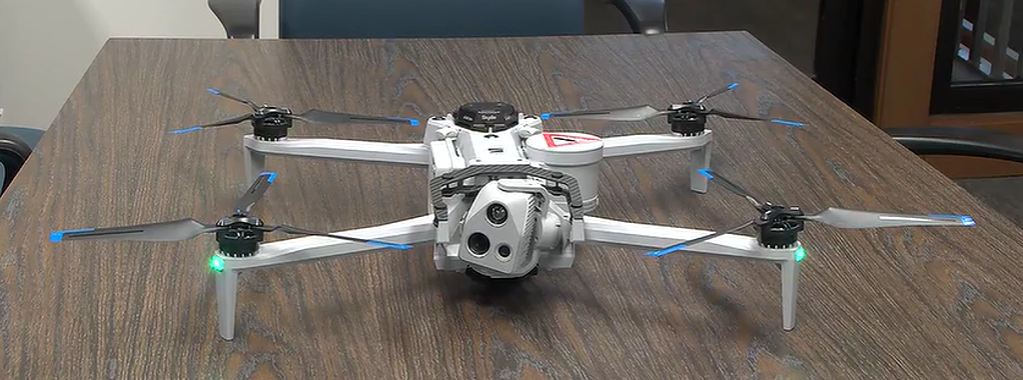
The city’s Gatlinburg Public Safety Aviation Program uses three remotely operated drones stationed at launch sites throughout the city. Managed by Ian Wedlock, a Gatlinburg firefighter and paramedic, the program became operational in September and has already completed approximately 120 missions.
When a 911 call comes into dispatch, personnel can immediately launch a drone to the reported location.
“We’re able to just hit a button, the drone will autonomously take off and fly to that scene and look directly at where the call is happening,” Wedlock said.
The drones, manufactured by Skydio, are equipped with high-definition cameras and thermal imaging technology, allowing dispatchers and responders to assess emergencies in real time.
Faster Response Times
According to Wedlock, the drones often arrive at scenes in less than a minute and have beaten traditional responders to calls about 70% of the time.
Ronnie Barrett, chief of the Gatlinburg Police Department, said some drones can reach a scene in roughly 20 seconds, compared to more than a minute for an officer responding by vehicle.
The technology is especially valuable in Gatlinburg, where mountain roads, steep terrain and isolated cabins can create response challenges.
“With this program, we get there much faster,” Wedlock said. “We’re able to do a 360 of the scene within seconds and see all the hazards and see just what we’re dealing with at that time.”
Officials estimate the drones can save emergency crews 20 to 30 minutes in some situations by providing critical information before personnel arrive.
Firefighters Finding Fires Faster
The program has already proven valuable during multiple fire responses.
On Oct. 29, firefighters were dispatched to what was initially reported as a brush fire. When the drone arrived, it located a structure fire on a different road than originally reported.
Wayne Brandenburg, interim chief of the Gatlinburg Fire Department, said the drone helped direct firefighters to the correct location much more quickly.
“The drone flew over and actually found the fire, and it was actually on a different road,” Brandenburg said.
Officials also said thermal imaging has helped crews locate hidden fires inside buildings and pinpoint hotspots that may not be visible from the ground.
During one downtown hotel fire, a drone’s infrared cameras identified a fire burning in the roof, allowing firefighters to attack the blaze more effectively. In another incident, crews used thermal imaging to locate heat sources before the structure was lost.
Lessons From the Mountains
Brandenburg said the region’s mountainous terrain makes aerial views especially valuable.
Many rental cabins and homes in the Smokies are built on steep hillsides where responders can only see a portion of the structure from the roadway.
Drones provide firefighters with views of all sides of a building, helping them determine where a fire is spreading and what resources will be needed before crews arrive.
As Gatlinburg approaches the 10-year anniversary of the devastating 2016 wildfires, Brandenburg said the technology would have been an invaluable tool during those operations.
“This would have been a tremendous tool for us,” he said.
Helping Police Officers, Too
The Gatlinburg Police Department is also putting the drones to use.
Barrett said they have assisted officers during busy holiday weekends, traffic crashes, property complaints and flood monitoring operations.
The drones provide live video feeds, allowing officers to identify potential hazards before reaching a scene. Officials say the information helps improve safety for both first responders and the public.
“There’s an unlimited number of uses that we could have for the police department,” Barrett said.
Addressing Privacy Concerns
Officials stressed that the drones are dispatched only to the location of emergency calls and are not used to monitor private property without cause.
“They’re not there to look in anybody’s backyard or at any hotel business or anything like that,” Barrett said. “If that call is your backyard, then we’re going to look there. But if it’s not, we’re not even going to pay any attention to that.”
City leaders emphasized the drones are designed to assist first responders, not replace them.
Wedlock called the program a “game changer” and said he hopes it can expand in the future.
“It’s changed the way we operate,” he said. “It’s much safer. It’s much quicker.”