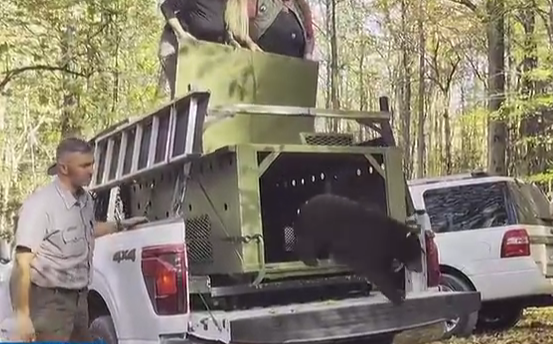
BLOUNT COUNTY, Tenn. (WOKI / WVLT) — Appalachian Bear Rescue has reached a major milestone, releasing its first group of rehabilitated bear cubs back into the wild after the organization reopened following an 18-month closure.
Six cubs were admitted to the Townsend-based facility this summer, and all six have now been successfully returned to their natural habitats.
Executive Director Greg Grieco said the releases mark an important moment for the rescue organization and its staff.
“Seeing this first class of cubs since we reopened go from 7.5 pounds to 55 pounds with the Hemlock bear was really a great experience for our staff,” Grieco said. “We’re so excited to be back to ‘bearsness’ as I like to call it.”
The organization spent much of its closure addressing health concerns and making improvements to its rehabilitation program. During that period, some bears in care developed pneumonia, leading wildlife officials to euthanize affected animals.
Since reopening, Appalachian Bear Rescue has implemented additional health and monitoring procedures for incoming cubs.
Grieco said cubs now spend at least two weeks in indoor-outdoor transition enclosures and undergo additional parasite screenings and treatments before moving into larger habitats.
“We’ve always de-wormed them upon intake, but what we’re doing now is making sure they have a two-week period in our indoor/outdoor enclosure areas,” Grieco said.
The organization has also changed how long cubs remain in rehabilitation. In previous years, some bears stayed until December, but staff determined extended stays were unnecessary.
“Those cubs staying into December just sort of turned into a walking hibernation state while they were here,” Grieco said. “They don’t need to be here into December because they would actually often get overly fat.”
Capacity Still Limited
While the group has resumed operations, Appalachian Bear Rescue remains at reduced capacity.
Currently, only several newly constructed enclosures are being used while the organization awaits the results of a soil study being conducted by the University of Tennessee on its older rehabilitation areas.
If those enclosures are cleared for use, the facility’s capacity could increase from six cubs to as many as 18 at one time.
“We feel very confident that no matter what the data comes back with UT that we’ll be able to use those old enclosures come spring,” Grieco said.
Tracking Bears After Release
Each cub was returned to the specific area where it was originally found. Before release, staff fitted the animals with tracking devices that will allow biologists to monitor their movements and well-being over the coming months.
Officials say spring will likely bring the next influx of cubs needing rehabilitation, as bears typically remain in dens during the winter hibernation season.
For now, the successful release of all six cubs marks a positive step forward for the East Tennessee wildlife rehabilitation organization as it resumes caring for orphaned and injured black bears.